
When Play Gets Rough: Understanding Big Body Play at Home
If your child loves crashing, climbing, spinning, or jumping, it can feel exhausting — and sometimes concerning. But this “rough play” is a key part of child development for ages 2–5. Understanding Movement & Impact and Upside-Down & Orientation helps parents support physical learning, self-regulation, and confidence at home.
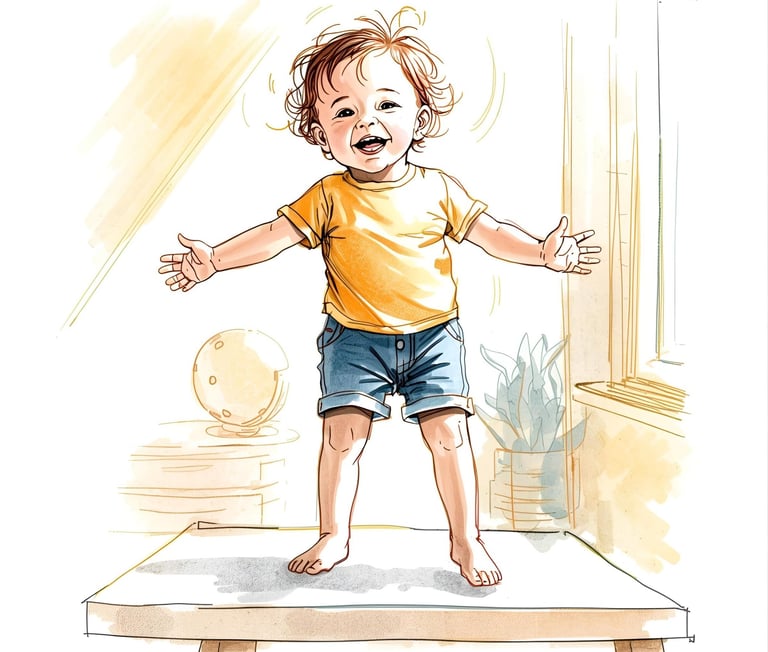
There was a stage where our couch stopped being a couch altogether. It became a launchpad. Cushions on the floor, repeat jumps, big crashes, and endless movement. I remember thinking, How does this child still have energy? and Is this safe? - often in the same breath.
I’ve seen this same kind of play over and over again, too - not just in my own home, but while watching children in learning spaces. Different children, different rooms, same big movements. And every time, there’s that familiar adult pause: Should I stop this?
If you’ve noticed your child
jumping off cushions or low furniture,
crashing into pillows or mats,
spinning, rolling, or hanging upside down…
it might feel dangerous.
It might feel exhausting.
But this behaviour is purposeful and developmental.
What Big Body Play Teaches Children
Through movement and impact, children develop:
balance and coordination
spatial awareness
confidence in movement
sensory regulation and self-control
These activities provide essential feedback for the brain and body during toddler and preschool years.
Why This Behaviour Peaks Around Ages 2–5
Children at this stage are:
refining motor skills
exploring limits of their environment
learning to manage their energy
Big body play allows them to experiment with movement safely - and helps regulate emotions.
How Rough Play Looks at Home
rolling, tumbling, or crashing into cushions
climbing low shelves or furniture
spinning, twisting, or turning repeatedly
knocking down towers or objects
From an adult perspective, it can seem chaotic.
From a child’s perspective, it’s a learning opportunity.
How to Support Big Body Play at Home
create safe, padded spaces for active play
supervise without overreacting
offer challenges like low climbing or balance activities
celebrate their achievements and effort
This allows children to satisfy developmental urges while keeping them safe and confident.
How This Connects to Other Play Patterns
Children who enjoy big body play often also:
throw objects repeatedly (Movement & Impact)
carry or gather items (Carrying & Gathering)
explore construction (Connecting & Building)
If that sounds familiar, you might like:
“Why Your Child Keeps Throwing Things (And Why It’s Not Bad Behaviour)”
"Understanding Play Patterns: Why Your Child’s Behaviour Makes Sense (Even When It Feels Hard)"
Calm Parenting Through Understanding
Recognizing rough-and-tumble play as learning rather than mischief allows parents to respond with calm, guide boundaries effectively, and support skill development.
Want Confidence With Active Behaviour?
Play Talks: Calmly Understanding Your Child’s Behaviour helps parents decode rough play, stacking, carrying, and other common behaviours - so you can respond calmly and confidently at home.
You might also like:
Why Your Child Keeps Throwing Things (And Why It’s Not Bad Behaviour)
The Hidden Order in Messy Play
hello@playandpurposeco.com.au
© Play & Purpose Co. 2025. All rights reserved.


We acknowledge the Traditional Custodians of the many lands across Australia. We honour their enduring connection to land, waters, and community. We pay our respects to Elders past and present, and to the children of today - the future generations we walk alongside.