Loose Parts Play at Home: Simple Setups That Spark Curiosity (Without More Toys)
Loose parts play is one of the easiest ways to support calm, focused play at home. Learn how simple, everyday materials can spark curiosity, reduce overwhelm, and help children play for longer — without buying more toys.
If your home feels cluttered with toys…..but your child still says, “I’m bored”…..or jumps from one thing to the next without settling…..
you’re not doing anything wrong.
Often, it’s not that children need more to play. They need different.
This is where loose parts play comes in.
What Is Loose Parts Play (In Real Life)?
Loose parts are simple, open-ended materials your child can move, combine, carry, build with, take apart, and use in their own way.
Nothing flashy.
Nothing battery-operated.
Nothing with one “right” purpose.
Think:
lids, bottle tops, corks
cardboard boxes and tubes
fabric scraps, scarves, ribbons
pebbles, sticks, shells, leaves
bowls, cups, spoons, baskets
These materials don’t tell children how to play, and that’s the magic.
They invite imagination, problem-solving, and long stretches of focused play.
What Is an “Invitation to Play” at Home?
An invitation to play is simply how you set something out or make it available to your child.
Not instructions.
Not a craft activity.
Not a demand to “go play.”
It might be:
a small basket on the table
a tray on the floor
a few thoughtfully chosen items laid out
The message is quiet but powerful:
“This is for you. Explore it however you like.”
Children often engage more deeply when play feels like an invitation - not a task.
Why Loose Parts Play Helps Children Settle
Loose parts naturally support common play patterns like:
filling and emptying
building and knocking down
carrying and gathering
arranging and re-arranging
pretending and storytelling
These patterns aren’t random - they help children make sense of the world:
regulate their bodies and emotions
focus for longer
feel capable and in control
work through ideas at their own pace
When play meets these needs, behaviour often softens, not because you enforced calm, but because your child found it themselves.
5 Easy Loose Parts Setups You Can Try This Week
You don’t need to do all of these.
One is plenty.
1. “Potion” Mixing Play
A favourite for ages 2–5.
Try:
bowls, spoons, jars
water + petals, leaves, herbs, citrus slices
Let your child pour, mix, stir, and tip.
Be ready, it’s messy - but deeply satisfying and calming for many children.
2. Tiny Worlds with Nature Bits
Perfect for quiet, focused play.
Try:
pebbles, bark, sticks, leaves
a tray or mat
small figures or animals (optional)
Children build little scenes, tell stories, and revisit them again and again.
3. Story Stones or Symbols
Simple and surprisingly engaging.
Try:
smooth stones or wooden discs
draw simple symbols (sun, heart, tree, house)
Children might sort them, line them up, or use them to tell stories - all valuable forms of play.
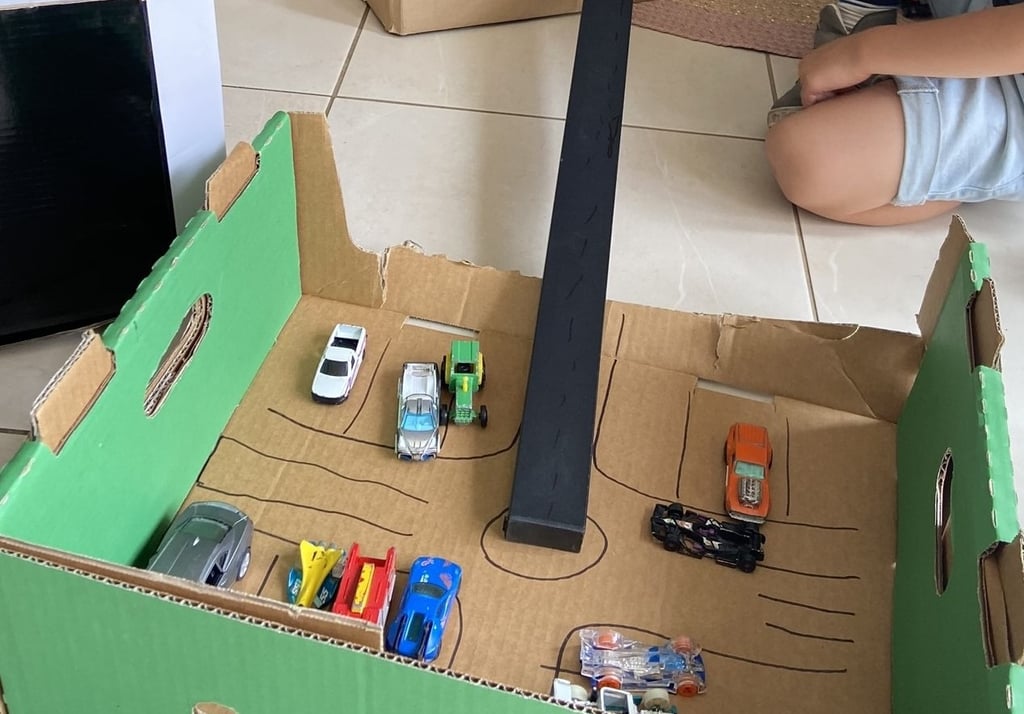
4. Cardboard Construction
For children who love building and connecting.
Try:
cardboard offcuts or boxes
pegs, clips, string, tape
No instructions needed. Let them design, attach, rebuild, and problem-solve.
5. Open-Ended Dress-Up & Pretend Play
Instead of plastic costumes.
Try:
scarves, fabric pieces, hats
baskets, old keys, sunglasses, wooden utensils
Loose items allow children to decide who they are and what is happening - without limits.
Less Stuff, Deeper Play
Many parents feel pressure to keep adding toys, or just naturally end up with so much stuff.
But often, less does more.
When play spaces are calmer and simpler:
children engage for longer
play becomes deeper
behaviour feels less frantic
clean-up is easier
Loose parts aren’t about aesthetic perfection. Most can be recycled, natural or household items.
They’re about giving children space to follow their natural play urges - and giving parents a break from constant entertainment.
How This Links to Behaviour at Home
If your child:
tips everything out
throws toys
moves objects around the house
rebuilds and destroys repeatedly
These play setups aren’t just “activities”, they’re tools for understanding behaviour.
This is exactly what we explore inside Play Talks: Calmly Understanding Your Child’s Behaviour, how to decode what your child’s play and behaviour are telling you - and how to respond with calm, confidence, and clarity.
A Gentle Place to Start
You don’t need to overhaul your home.
You don’t need expensive resources.
And you don’t need to get it “right”.
Start with:
one basket
a few loose items
and curiosity instead of control
Notice what your child repeats.
Notice what settles them.
Notice how behaviour shifts when play meets their needs.
Final Thought
Loose parts play isn’t about creating the perfect setup.
It’s about creating space - for curiosity, regulation, and connection.
And when children feel free to explore in ways that make sense to them, home feels calmer too - not because play was managed, but because it was understood 💛
If you’d like support learning how play connects to behaviour (and how to respond without second-guessing yourself), Play Talks: Calmly Understanding Your Child’s Behaviour is there to guide you gently, step by step.
hello@playandpurposeco.com.au
© Play & Purpose Co. 2025. All rights reserved.
We acknowledge the Traditional Custodians of the many lands across Australia. We honour their enduring connection to land, waters, and community. We pay our respects to Elders past and present, and to the children of today - the future generations we walk alongside.